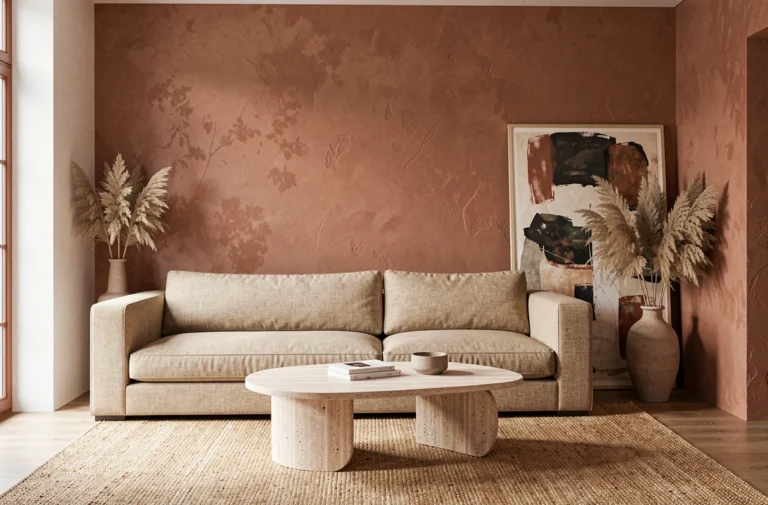
When renting a property under a standard lease, it effectively becomes the tenant’s primary residence, allowing them to enjoy (almost) as if they were the owner.
In particular, the law protects this freedom of the tenant by listing abusive clauses and reminding them of their right to modify the structure of their housing.
In this article, we will explore the theoretical provisions regarding the modification of housing by the tenant, and then we will delve into the interpretation of the texts by the judges.
Executive Summary
- Development is free, transformation is not
- Practical housing cases by tenant
- Changing the color of paints
- Replacing the flooring
- To dismantle a partition
- Installing an air conditioner or satellite dish
- Rehabilitation at the end of the lease
- Compensation for authorized work at the end of the lease
- Rehabilitation of unauthorized work at the end of the lease
Development is free, transformation is not
The law of July 6, 1989, which governs the rent of housing as a primary residence (furnished or unfurnished), is very explicit about the tenant’s right to modify their housing:
The landlord is required to: […] Not oppose improvements made by the tenant, as these do not constitute a transformation of the rented property.
Article 6 of the 1989 law Therefore, this is theoretical, but in practice, how do you define a transformation of the rented property?
The case law is rich in this area and addresses the practical details of the usual housing of tenants to determine whether or not it constitutes a transformation.
Practical housing cases by tenant
The information sheet to be attached to the lease provides a first clarification of the tenant’s work and specifies:
For example, changing the color of paints or putting up wallpaper could be considered a simple arrangement of the dwelling that the landlord could not prohibit. On the other hand, cutting a partition or converting a room into a kitchen would constitute a transformation that requires the landlord’s written permission.
Information notice on the lease Changing the color of paints
This is the most classic case: you rent a newly painted house in white, the tenant moves in and repaints a room pink. At the exit inventory, is it possible to ask the tenant to repaint the room in white?
The case law is consistent on the issue: the tenant is not obliged to return to the original paint, except in cases where the colors used make the housing uninhabitable.
=> Unless otherwise stated in the lease, the tenant is free to repaint the living rooms as they wish without being bound by the original color, provided that the chosen colors do not affect the habitability or normal use of the premises https://t.co/HTpaJ9apOA
— Louis du Merle (@louisdumerle) May 8, 2018
Here is an example of recent case law:
Due to the inadequacy of the chosen paints (designated as apple green for the walls and burgundy for the built-in furniture), SCI Bailleur claims unauthorized transformation under the law of July 6, 1989, and necessary rehabilitation at the tenants’ expense.
However, except for specific clauses for the lease, the tenant who is devoid of accessories that do not transform the rented property and do not affect the configuration of the premises is free to repaint the living rooms to their liking without being bound by the original color, provided that the chosen colors do not affect the habitability or normal use of the premises, so that painting the walls of a kitchen emerald green or lawn green and integrated kitchen furniture in eggplant — as shown in the photographs in question — does not characterize in this case prohibited modifications or those subject to prior authorization from the lease, but rather simple arrangements that are in line with the fashionable colors of the time.
CA Nîmes, 2nd Chamber, May 3, 2018, n. 17/02541. Read online at Doctrine It is likely, however, that the judge would not have accepted the change of paint, given that the wall had been repainted black or with Disney wallpaper.
Replacing the flooring
In the same way as painting the walls, it indicates that replacing the flooring is considered a freely viable arrangement by the tenant who can then change the parquet or replace the carpet.
Be careful, the provision consists of replacing the floor with an equivalent ground. If the tenant wants to lay carpet over existing parquet, this is a transformation that may require renovation (often costly if the parquet under the carpet has been damaged by glue or staples).
To avoid any disputes, it is strongly recommended to specify the conditions of the premises, in addition to the conditions of the floor, the type of covering upon the tenant’s entry: carpet, parquet, tiles, etc.
Dismantling a partition
Dismantling a partition is generally considered a transformation of the housing, requiring the owner’s consent. We took this example because it is the most common transformation work (along with changing carpet flooring) but the list of treatment works is not exhaustive: removal of shutters, additional toilets, cutting down trees in the garden, installing a swimming pool, etc. Heavy works require the owner’s consent.
Installing an air conditioner or satellite dish
The installation of facades or rooftop equipment, such as a satellite dish or air conditioning unit, is considered a conversion work that requires the landlord’s approval; as confirmed by recent case law.
This initial authorization is particularly necessary to ensure that planning or co-ownership rules do not prevent the installation of such equipment, or to remind the tenant of the constraints that weigh on the characteristics of the plants; for example, co-ownerships where the color of the shutters or blinds is uniform throughout the building.
Tenants who have the sole right to enjoy the rental premises do not have the right to drill the load-bearing walls. They cannot, without the landlord’s permission, have a lock and an air conditioning satellite dish installed at the front of the building https://t.co/4OV0IaftZH
— Louis du Merle (@louisdumerle) January 15, 2019
Specific clause in the lease
It may be useful to remind the tenant in the lease of the need to ask the owner for permission to transform the housing.
The landlord may also introduce a clause requiring the tenant to obtain their permission to make fittings such as changing paint. The validity of the clause is subject to the judge’s ruling in fine, but that of previous case law seemed to open this possibility by referring in its decision to “except for the specific conditions of the lease.”
Drafting a compliant lease Clauses and annexes provided
Smartloc Rental
Rehabilitation at the end of the lease
As we have seen, the law protects the tenant by preventing the landlord from opposing development. In return, the law protects the landlord in cases of unauthorized modifications. We will therefore separate two cases at the end of the lease, the fate of authorized modifications and those that are not.
Compensation for authorized work at the end of the lease
The tenant wanted to install blinds, asked the landlord for permission, which was granted. Upon the tenant’s departure, no problem, the blinds remain as they are; either the agreement was accompanied by financial compensation encouraging the tenant to install and leave them, or this consideration can be negotiated by mutual agreement at the time of departure.
It should be noted that the landlord cannot force the tenant in this case to rehabilitate the housing.
Rehabilitation of unauthorized work at the end of the lease
The tenant transformed the housing by tearing down a wall, without needing the owner’s permission, who realizes this during the exit inventory.
The law thus protects the landlord who has no obligation to compensate the tenant for the work (which seemed obvious and is also the case in particular, Article 7f of the 89 law allows the landlord to demand the initial rehabilitation of the housing at the tenant’s expense, possibly taking the security deposit into account. In this regard, we recommend reading our information sheet on the return and charge of the security deposit.
Tag: apartment floor