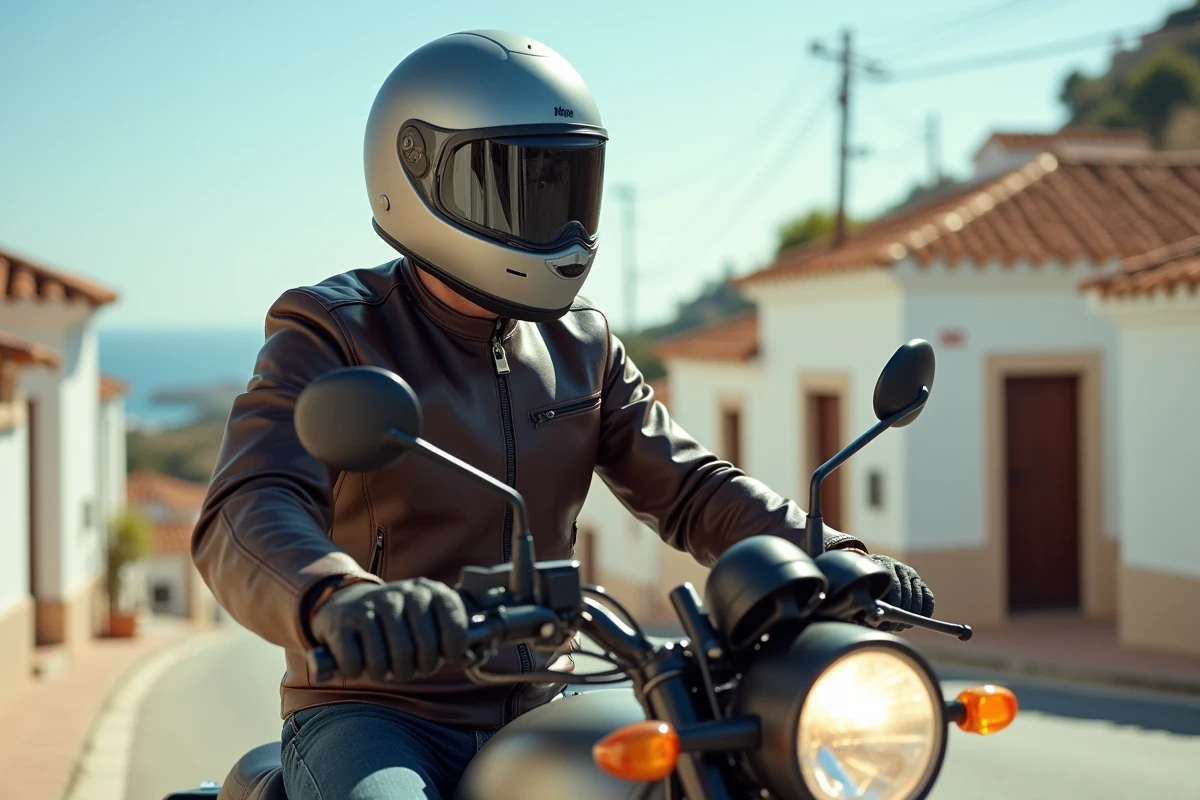
You are preparing a road trip in Spain with your 125cc, or you are considering renting a scooter there during your vacation. Before you start, one question arises: does your license allow you to ride on Spanish roads? The rules differ depending on the country of issuance of the license, the category obtained, and your driving experience. Here’s what to check before you leave.
French B License and 125cc: What Changes Once You Cross the Border
In France, the 7-hour training allows holders of the B license (with at least 3 years of experience) to ride a 125cc motorcycle or scooter. This authorization is based on a national equivalence noted on the license under a specific mention.
Spain recognizes licenses issued within the European Union. Therefore, your French B license remains valid on Spanish territory, provided that the mention or category on your document meets local requirements. Recognition is based on the harmonized EU framework for driving licenses, not on a bilateral agreement between France and Spain.
A common pitfall: a French driver thinks that their 7-hour training is sufficient everywhere in Europe. In reality, the conditions for riding a 125cc with the license in Spain depend on what is specifically mentioned on your driving title. Make sure that category A1 (or its equivalent) appears on your license before departure.

Motorcycle License Categories in Spain: A1, A2, A and B License
The Spanish system classifies motorcycle licenses by engine size and power. Understanding these categories avoids unpleasant surprises during a roadside check.
AM License
This allows the riding of mopeds up to 50cc. Nothing to do with a 125cc, but many tourists confuse the two.
A1 License
The A1 license corresponds to 125cc motorcycles with a maximum power of 11 kW. This is the category that concerns you if you want to ride a 125cc in Spain. Spanish residents can obtain it from the age of 16.
A2 and A Licenses
The A2 license covers motorcycles up to 35 kW, accessible from the age of 18. The A license, with no power limitation, can be obtained at 20 years old (or after 2 years of holding an A2 license). These categories exceed the scope of the 125cc but obviously include the right to ride smaller displacement motorcycles.
Spanish B License and 125cc
In Spain, holders of the B license (car) can ride a 125cc under certain experience conditions. The Spanish B license allows riding a 125cc after 3 years of holding it. This point is similar to the French system, but the training conditions differ.
Mandatory Equipment and Checks in Spain: The Ground Rules
Spanish authorities have strengthened their approach to motorcyclist safety in recent years. The policy is no longer limited to checking the license category. It includes training, equipment, and the visibility of the rider.
You may be used to riding in France with the bare minimum required. In Spain, roadside checks pay particular attention to several concrete elements:
- A certified helmet is mandatory for both the rider and the passenger. Riding without a helmet results in a fine and the immobilization of the vehicle.
- Gloves, high-top boots, and a jacket with protections are highly recommended, even if only gloves and the helmet are subject to systematic checks.
- Reflective vests or high-visibility elements are recommended by Spanish road safety campaigns, especially in urban and peri-urban areas.
- Low beam lights must remain on during the day and night on intercity roads.
This “training + equipment + visibility” approach reflects a recent trend in Spain. Do not rely solely on displacement rules: a check can also focus on the condition of your tires, mirrors, or lighting.
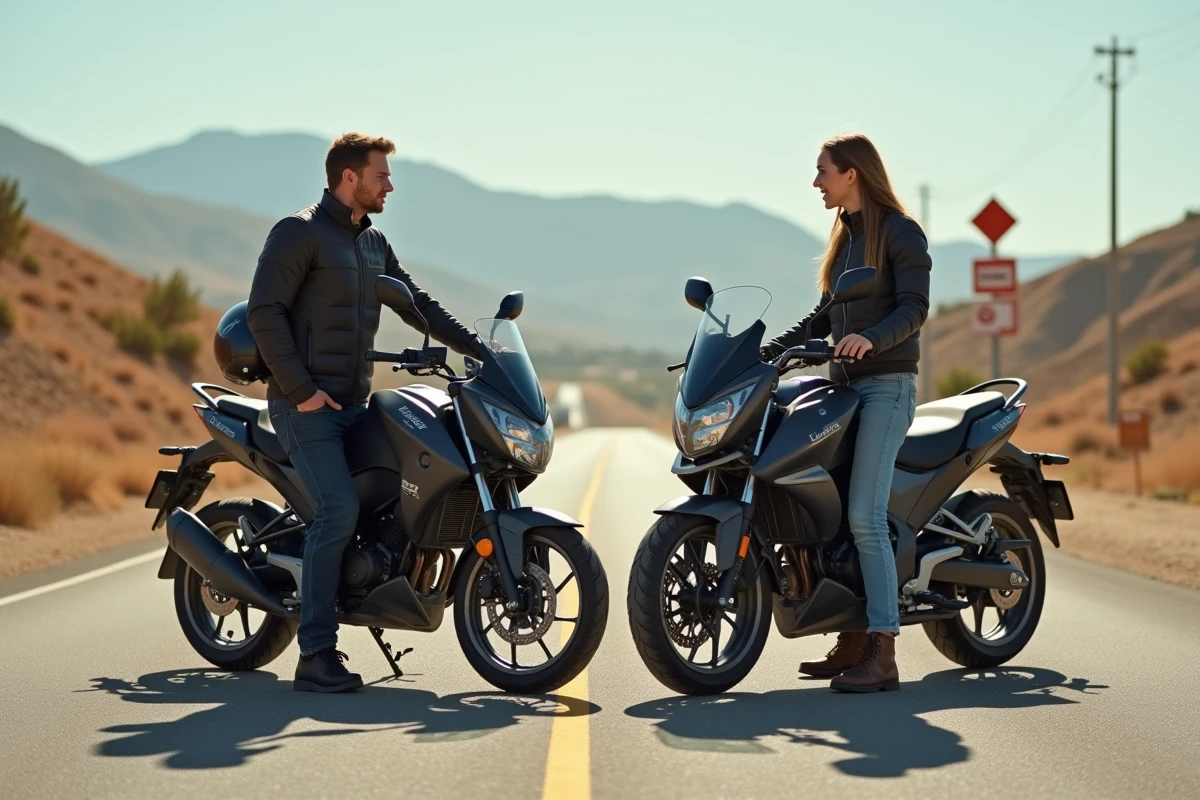
125cc Insurance in Spain: Checks Before Departure
Riding in Spain with your own 125cc means having insurance that covers driving abroad. The green card (international insurance certificate) remains the reference document to prove your coverage in a European country.
Before you leave, contact your insurer to check two points:
- Does your contract cover driving in Spain, and for what duration?
- Does your coverage include vehicle repatriation assistance in case of breakdown or accident?
- The insurance certificate must be on board the vehicle at all times, just like the driving license and registration document.
If you rent a 125cc scooter on-site, insurance is typically included in the rental contract. Read the terms to know the amount of the deductible and any possible exclusions (unpaved roads, passenger, etc.).
Sanctions and Fines: What a French Driver Risks in Violation
Riding without the correct license or without insurance in Spain exposes you to heavy penalties. Driving without the appropriate license is considered a crime under Spanish law, not just a simple infraction. The consequences go beyond a fine: immobilization of the vehicle, summons before a judge, and in some cases, prohibition from driving on the territory.
Fines for violations of the Spanish traffic code are directly notified to the foreign driver. Since the implementation of cross-border exchanges within the EU, some fines can also be sent to French authorities for collection.
A practical tip: keep a copy of your 7-hour training certificate (if applicable) with your license. During a check, this document can clarify your situation with Spanish officers, who may not always be familiar with the French equivalence system.
Administrative preparation takes about twenty minutes before departure. Valid license with the correct category, green insurance card, training certificate: these three documents are sufficient to ride peacefully on Spanish roads with a 125cc.