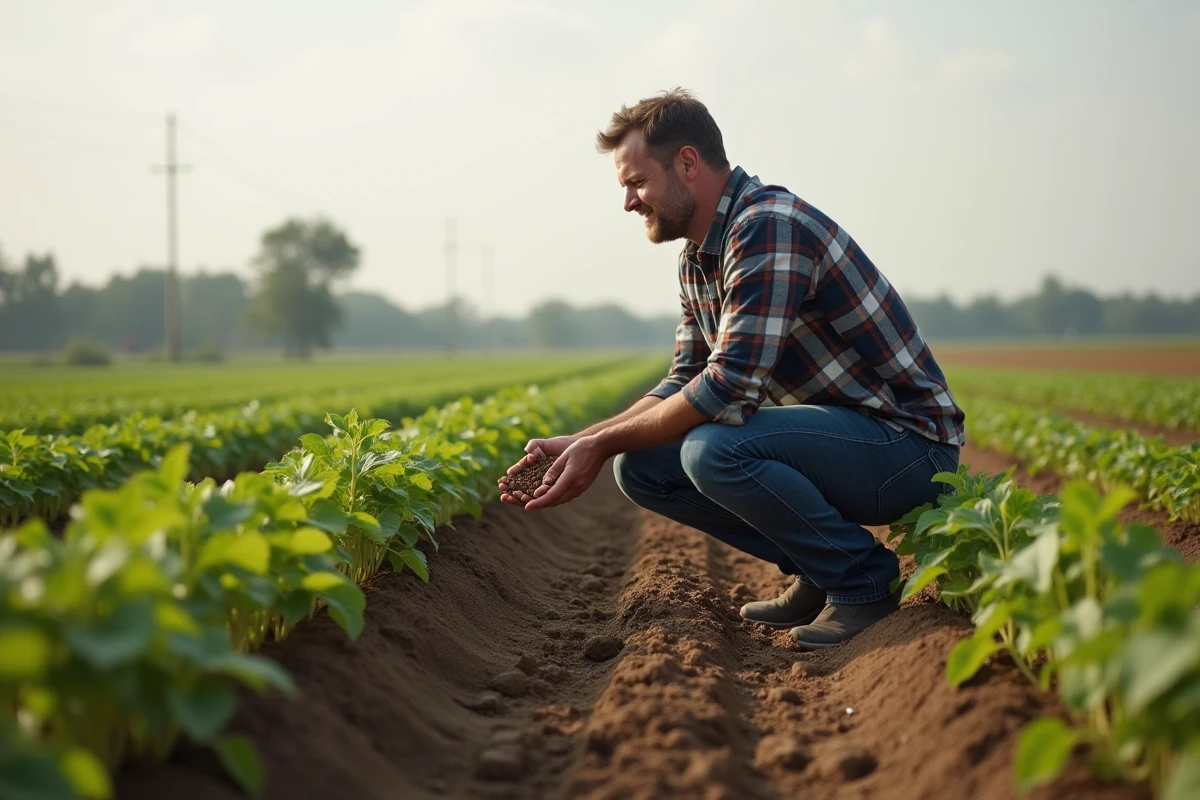
3.2%. This is the average increase in the price of agricultural land per hectare in France in 2023, while residential real estate is stagnating. Behind this figure, a trend is emerging: never before in twenty years have individuals invested so much in cultivated land. Agricultural land transactions are now attracting a new wave of savers, well beyond the circle of insiders.
Where the stock market is doing the splits, agricultural land is charting its course, unperturbed. Land groups, whether agricultural or forestry, are seeing their fundraising soar, while fractional investment platforms are multiplying offers for individuals. The rush for the hectare is no longer reserved for professional farmers.
Agricultural land, a tangible asset at the heart of economic and societal transformations
It is impossible to understand the enthusiasm for agricultural land without grasping its unique place in the French economy. As the leading European producer, the country relies on 26.7 million hectares of agricultural land, a stable foundation that serves as a benchmark while financial markets are in turmoil. Investing in land means betting on a tangible asset, a physical resource that provides reassurance when financial uncertainty is on the rise. Today, owning a hectare costs between 6,000 and 8,000 euros, a remarkably stable level, driven by limited supply and unwavering demand.
Investing in agricultural land is not just about diversifying one’s assets. It aims for an annual return ranging from 2% to 4%, while betting on long-term appreciation, fueled by the scarcity of land. The growth of the organic sector, which generated 11.9 billion euros in revenue in 2019, according to the Agency Bio, illustrates this appeal for responsible agricultural practices, within a framework of ecological transition. Land remains largely insulated from the fluctuations of financial markets, which limits the risks of sudden losses.
However, the equation is not limited to finance. In the next ten years, one in two farmers will retire, while the sector’s revenues struggle to take off. When individuals invest in land, they contribute to the renewal of generations and the vitality of French agriculture. With nearly 167 billion euros in assets, the agricultural land market offers a field of opportunities where return, impact, and asset protection come together.
What advantages and limitations for those betting on rural land?
Why is agricultural land so appealing? First, for its ability to generate a consistent performance. Over twenty years, French agricultural land has shown an average return of 3%, sometimes nearing 4% over the last decade. This regularity contrasts with the instability of financial markets. Agricultural rents, paid by operators, guarantee an annual rental income of 2% to 4%. Additionally, there is the prospect of a capital gain upon resale, driven by sustained demand against a limited supply: each plot, each hectare increases in value over time.
From a tax perspective, agricultural land offers attractive schemes: deductions, partial exemptions, particularly on the IFI or during transfers. Whether investing directly or through an agricultural land group (GFA), capital protection is complemented by advantages for family succession.
Here are the points that savers often remember when they start:
- Rental yield: between 2% and 4% per year
- Overall performance: up to 7% if long-term appreciation is included
- Tax advantages: partial exemption from IFI, deductions during transfers
However, not everything is without constraints. Rural land lacks liquidity: selling a plot takes time, especially since the SAFER has a right of preemption. Agricultural leases strictly regulate the relationship with the operator. Profitability depends on the health of the operation, and management requires mastering the intricacies of the sector. Without vigilance, yields can diminish.

Between financial innovation and concrete impact: an overview of new ways to invest in land
Agricultural land is becoming more accessible. Today, we see a wide variety of profiles interested in it, well beyond farmers or seasoned investors. This change is explained by the rise of hybrid solutions, at the intersection of finance and environmental commitment. Agricultural crowdfunding has emerged as one of the main entry points. Now, it only takes a few hundred euros to contribute to the purchase or modernization of a farm, diversify one’s savings, and support the ecological transition of the sector.
Another avenue: unit-linked funds dedicated to agriculture, integrated into certain life insurance contracts. These vehicles, indexed to the value of rural land, allow exposure of savings to tangible assets while aiming for capital growth. Mission-driven companies or cooperatives, such as SCIC, manage these collective investments and oversee each project, from selecting operators to distributing profits.
To better understand what these formulas bring, here are the points often highlighted:
- Accessibility: low entry tickets, digitized processes
- Impact: concrete participation in land preservation, support for organic farming
- Diversification: the possibility to invest in land, forests, or innovative agricultural companies
The success of these solutions reflects a growing desire: to give meaning to one’s savings and to rely on a sector resilient to stock market fluctuations. In a world where volatility reigns, agricultural land stands out as a solid foundation, both a refuge and a springboard to support the transformation of French agriculture.