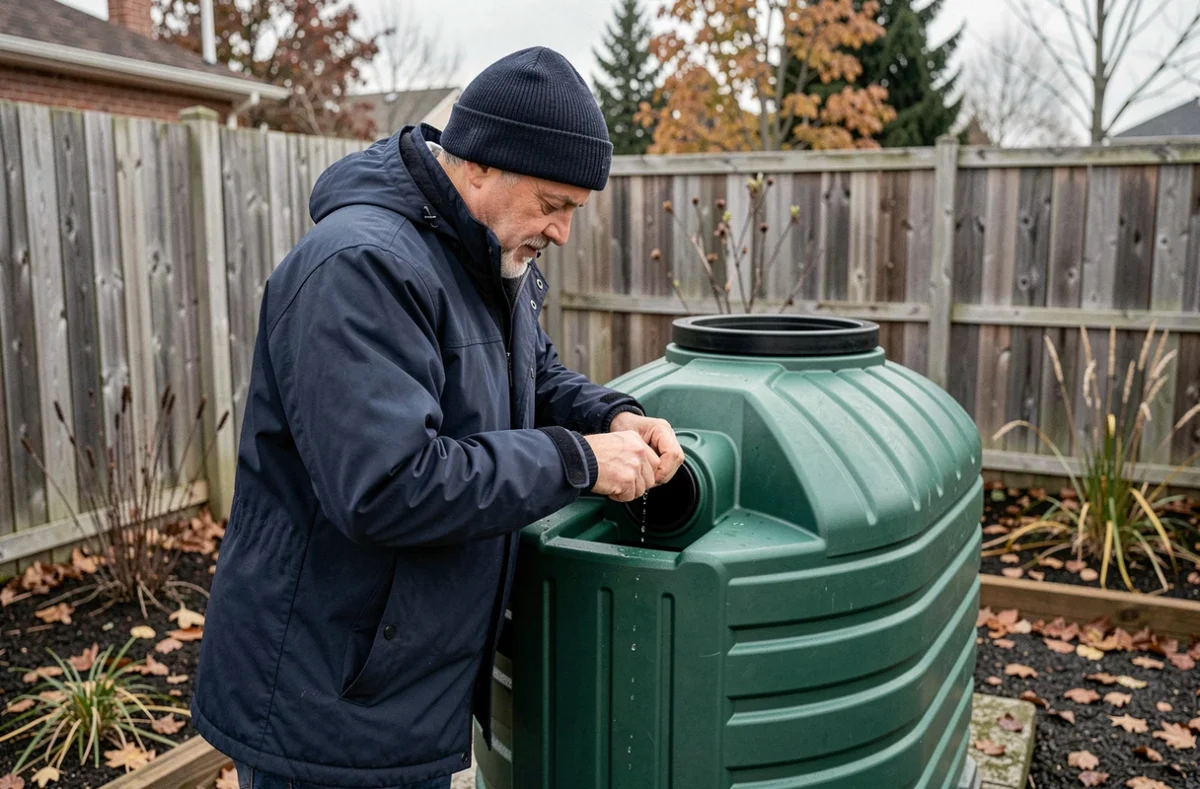
The winter drying of rainwater collectors is a crucial imperative. Failing to perform this task can lead to harmful consequences, including damage to the equipment due to the expansion of frozen water. Additionally, stagnant water residues can encourage the growth of harmful bacteria. To avoid these inconveniences, adopt effective strategies to empty your rainwater collector. For example, use a pump to extract the remaining water after regular use. Also, make sure to clean the interior to eliminate any deposits that may have accumulated. This way, your collector will be ready to face winter without risk.
Winter Drying Imperative for Rainwater Collectors
Winter is approaching, a season that brings its share of challenges for any homeowner, including the proper maintenance of rainwater collectors. These tanks are essential for collecting rainwater and reusing it for various domestic purposes, thus contributing to the conservation of drinking water. However, their maintenance during the winter period requires special attention.
When the mercury drops below zero during frosts, the water stored in these containers can freeze and cause considerable damage not only to the tanks themselves but also to the entire drainage system. As the water turns to ice, it expands; if a collector is filled to the brim when it freezes, it risks bursting or cracking under pressure.
To prevent this, it is strongly recommended to empty the collectors before temperatures drop too low. This simple precaution ensures not only their durability but also their continued efficiency when warmer days return. Furthermore, it prevents any undesirable accumulation of stagnant water that could attract harmful insects like mosquitoes during mild winter days.
It is necessary to ensure that no new water enters during this critical period. Good insulation could be considered as an alternative solution; however, it has its limitations as it does not protect against deep freezing.
Harmful Consequences of Not Draining Water Before the Cold Season
Winter is coming and brings with it a host of complications, particularly regarding the maintenance of our outdoor spaces. Among these issues is the improper drainage of water before the cold sets in. It is crucial to understand the risks associated with this negligence.
When water stagnates in pipes or external tanks without being adequately drained, it can lead to a series of potentially costly and dangerous problems. The most obvious of these is, of course, the threat of freezing. Water freezes when it reaches 0°C, and as we all know, water expands when it freezes • this means it needs more space in solid form (ice) than in liquid state.
This could put additional pressure on your installations, causing significant material damage if care has not been taken to drain any stagnant water before the onset of winter freezing. Cracks in pipes can trigger a destructive domino effect on your entire external hydraulic system: a single weak point is enough to cause a complete rupture.
Then comes the crucial question of sanitation. Water that stagnates for a long time can quickly become a breeding ground for various types of harmful bacteria and microorganisms.
Strategies and Methods for Effectively Draining Your Rainwater Collector
Draining your rainwater collector may seem like a daunting task at first, but there are several tips and techniques to do it effectively. Here are some of the best tips to help you accomplish this task more easily and efficiently.
Use a liquid vacuum: This is probably the simplest and fastest method. You just need to plug the vacuum into the tank and then turn on the device. In a few minutes, all the remaining water will be extracted from the container.
Open all faucets: Another commonly used technique is to open all the faucets in the system so that any excess water can drain naturally by gravity.
Using dehydrating gel: This product is ideal if you want to quickly eliminate a large amount of moisture without needing to use additional tools. To do this, simply pour the dehydrating gel into the tank before sealing it tightly.
Hire professional services: For those who do not want to get their hands dirty or are unsure of their technical abilities, hiring a professional can be an excellent solution. They usually have the necessary equipment to carry out this operation quickly and efficiently.
Rinse with a pressure washer: If your collector still contains a lot of dirt after being emptied, using a pressure washer can be very helpful.