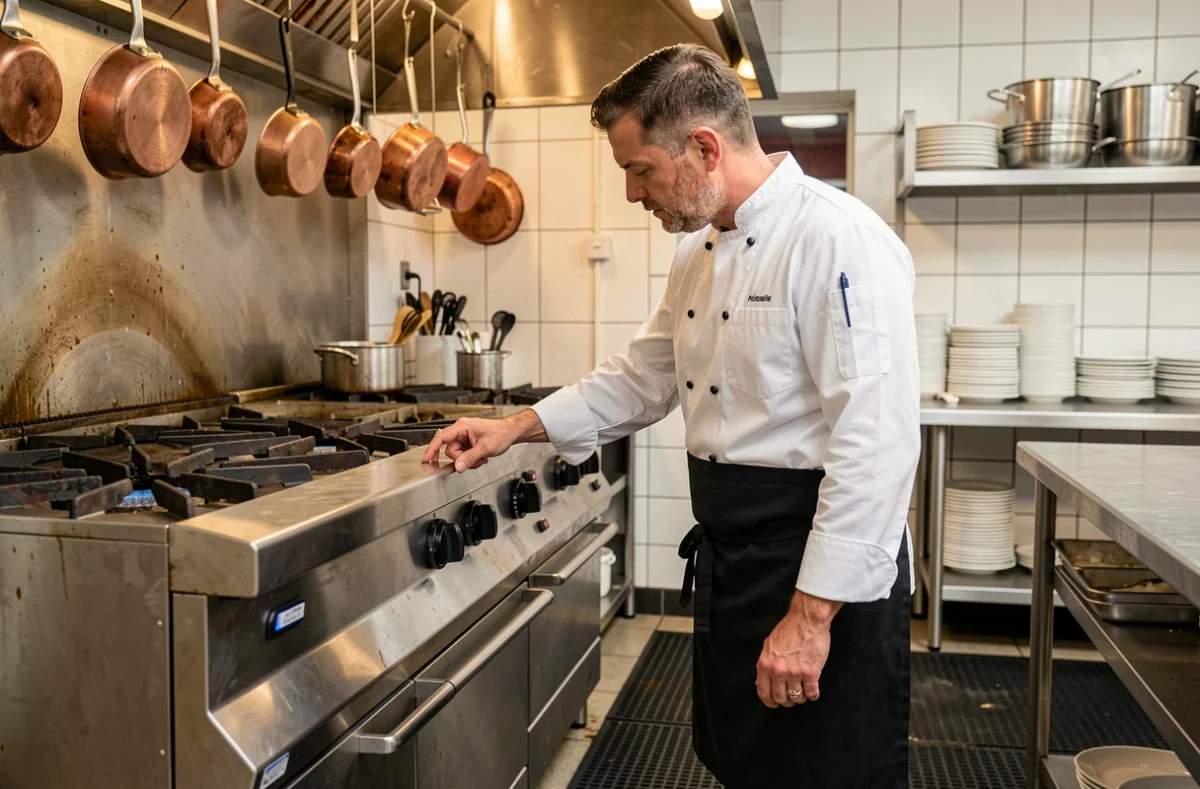
An oven that breaks down on a Friday night during service, an undersized cold room for the weekend preparation volume: these situations reveal how much the choice of professional equipment determines the profitability of a restaurant or hotel establishment. Choosing professional equipment well means first understanding the technical constraints that weigh on each workstation, then balancing durability, regulatory compliance, and actual budget.
Refrigerants and F-Gas III regulation: a priority criterion for professional refrigeration
When comparing two refrigerated cabinets, the instinct is to look at the price, capacity in liters, and energy class. Since March 11, 2024, another parameter has become essential: the type of refrigerant used.
The European F-Gas III regulation organizes a gradual phase-out of high global warming potential refrigerants. In practical terms, some refrigerants are already restricted for maintenance, which can make maintaining recent equipment difficult or costly in the medium term.
Have you spotted a cold room at an attractive price? Check which gas it uses. A model operating with a low global warming potential refrigerant (R-290 or R-455A, for example) may sometimes cost more to purchase, but its maintenance cost will remain stable.
Conversely, a device using a refrigerant that is being restricted may incur unexpected maintenance costs from the very first years. The catalogs available on equipotto.fr allow you to compare the technical characteristics of different refrigeration equipment before making a decision.
Comparing only purchase prices masks the differences in longevity between two refrigeration devices. The refrigerant, the availability of spare parts, and the network of certified technicians in your geographical area weigh as much as the catalog price.
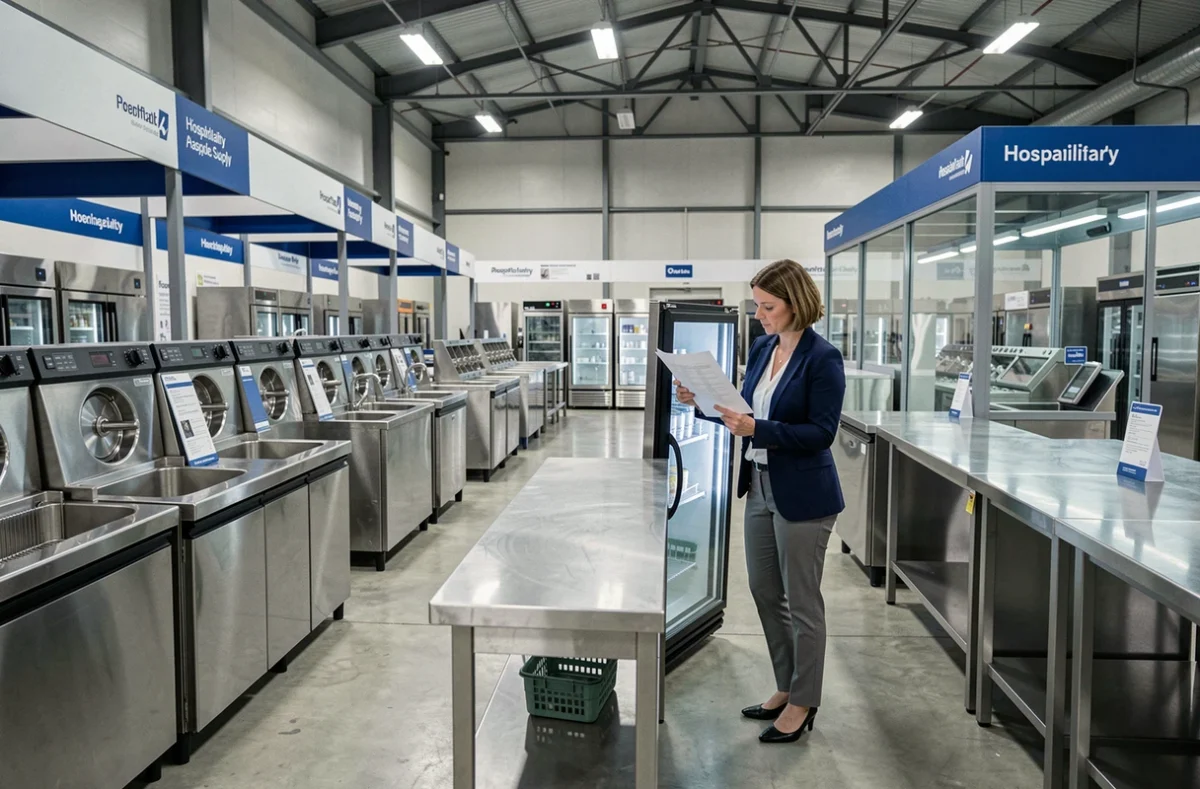
Sorting organic waste in the kitchen: plan equipment from the layout stage
Since January 1, 2024, source sorting of organic waste applies to all producers, regardless of volume threshold. A restaurant, even a modest one, must have dedicated containers and a separate collection circuit.
A common mistake is to treat this obligation as a simple addition of bins. In reality, the waste circuit must never cross that of clean food. This is a fundamental principle of food hygiene (HACCP logic), and it has direct consequences on the kitchen layout.
- Plan a location for organic waste bins near preparation stations, without obstructing the flow to cooking or plating areas.
- Choose containers with airtight lids that are easy to clean and whose capacity matches the volume of waste produced between collections.
- Integrate the flow of organic waste into the layout plan before purchasing large equipment to avoid having to reorganize the kitchen afterward.
This point is often absent from standard restaurant equipment lists. However, it changes the arrangement of work surfaces, sinks, and storage areas.
Cooking and preparation: size according to service, not the menu
A common trap is to buy an oven or griddle based on the number of dishes on the menu. The right reference point is the busiest service of the week.
Think in terms of rhythm rather than recipes
Consider your typical Saturday night. How many covers at the same time? How many different cooking processes are running simultaneously? It is the rhythm of the peak service that determines the power and number of cooking devices, not the variety of the menu.
A versatile professional combi oven can replace several devices (proofer, convection oven, steam cooker) and free up space. However, if your menu relies on long, low-temperature cooking and simultaneous grilling, a single oven will not be sufficient, regardless of its capacity.
Preparation and small equipment
Mixers, slicers, and beaters are often chosen at the last minute, with a residual budget. This is a mistake. An undersized mixer slows down setup and fatigues the team. Check the bowl capacity against the actual volume of daily preparations, not against the product sheet that claims “intensive” use without specifying a threshold.
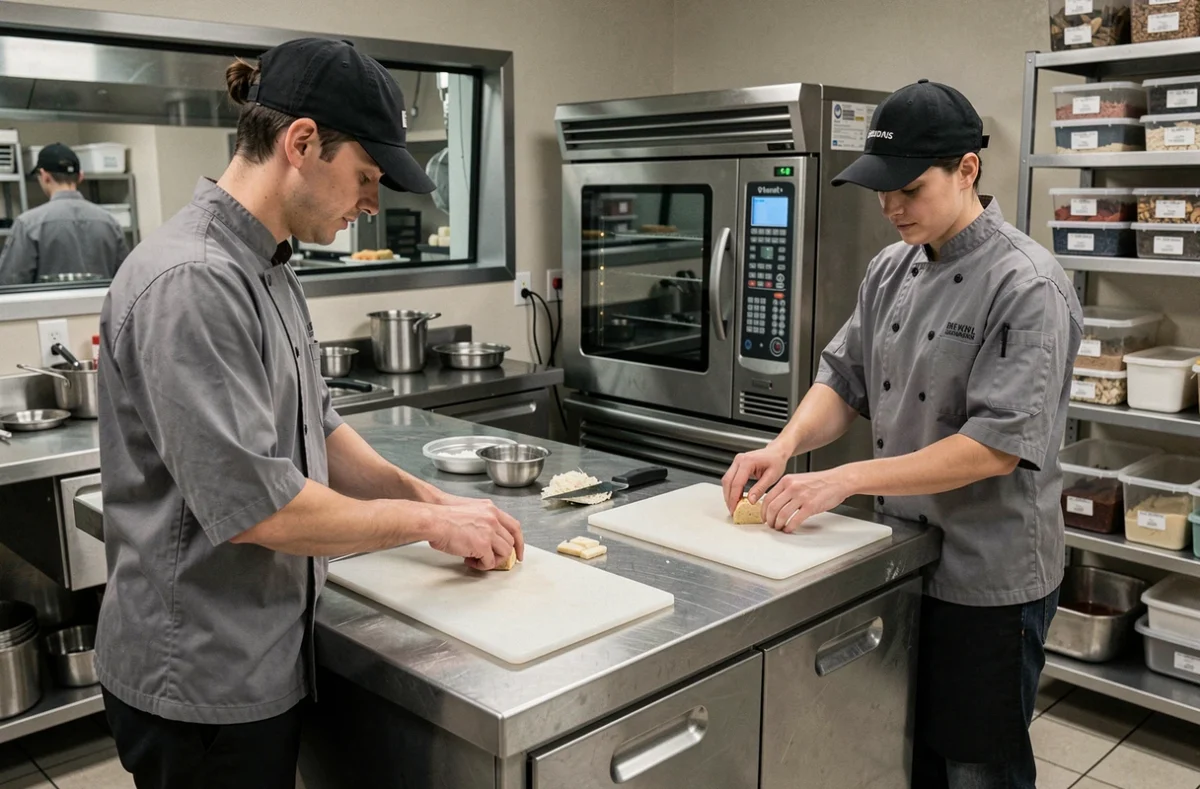
Energy efficiency of equipment in hospitality: the framework of the tertiary decree
Hotels and large restaurant establishments occupying buildings of at least 1,000 m² are subject to the Eco Energy Tertiary scheme. This framework sets energy consumption reduction targets at various deadlines.
Why does this change the choice of equipment? Because an oven, a hood, a hot water production system, or a cold room directly contribute to the building’s consumption. Each equipment replacement becomes an opportunity for measurable energy reduction.
- Prioritize cooking devices with heat recovery, which reduce the load on ventilation.
- Compare consumption per cycle (and not nominal power) for professional dishwashers and washing tunnels.
- Ensure that refrigeration equipment is compatible with the reduction targets set for the building, taking into account the F-Gas III regulation mentioned above.
In a hotel, the choice of a kitchen appliance is no longer solely the responsibility of the chef or the dining room manager. It is part of a global energy strategy, managed at the building level.
Robustness and sanitary compliance of professional catering equipment
Professional kitchen equipment must withstand intensive daily use. Surfaces in contact with food must be made of stainless steel or non-porous material that is easy to disinfect. This is not a luxury; it is a regulatory requirement related to food hygiene standards.
Equipment that complies with health standards reduces risks during inspections and simplifies daily cleaning. Check for the CE marking, compliance with the NF EN standard (when it exists for the device category), and the availability of technical documentation in French.
Ergonomics also matter. A work surface that is too low causes back pain, and a poorly positioned hood reduces smoke extraction and degrades working conditions. Testing equipment in real situations before purchase remains the best way to avoid these mistakes, whether in a showroom or at a colleague’s who is equipped with the same equipment.
The choice of professional equipment for catering and hospitality is not just about ticking boxes on a catalog. Refrigerants, organic waste, service rhythm, energy obligations: each constraint guides a concrete technical decision. It is better to invest time in analyzing these parameters upfront than to suffer unexpected costs or reorganizations once the equipment is installed.