Custom PVC sliding windows are evolving on specific technical points in 2026: PMR-compliant thresholds for exposed installation, profiles incorporating traceable recycled PVC via FDES, and RE2020 requirements tightening the admissible Uw and Sw coefficients. We review the changes that matter for specifiers and installers.
PMR Threshold and Water Tightness in Exposed Installation: The Technical Lock That Opens in 2026
Balancing accessibility and water tightness on an exterior-mounted PVC sliding window remains a recurring puzzle. The non-recessed PMR thresholds available until now are mostly limited to protected installations as per DTU 36.5. In direct exposure to the elements, water performance drops and infiltration incidents multiply.
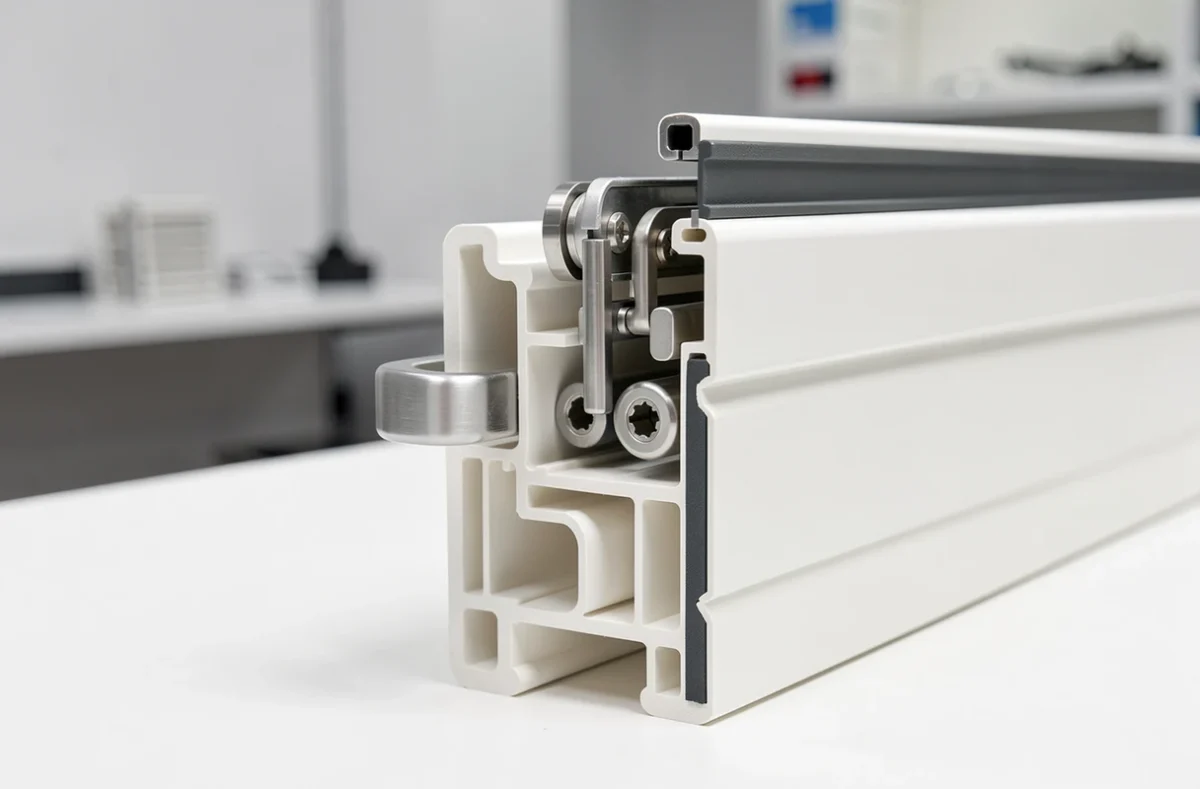
VEKA has announced a new PMR threshold for its VEKASLIDE Hi-5 sliding window, with a targeted water performance of class E*5A for December 2026. This level would allow for exposed installation without an awning or facade retreat, changing the game for ERP and adapted housing projects.
We recommend systematically checking the AEV class of the chosen PMR threshold, not just that of the frame. A sliding window rated A*4 E*7A V*C4 loses all coherence if the accessibility threshold brings the water tightness down to E*4A. Detailed information on these developments is compiled in the renovation guide maisonpro.fr, which puts the installation and regulatory constraints into perspective.
Traceable Recycled PVC: What FDES Changes for Custom Sliding Windows
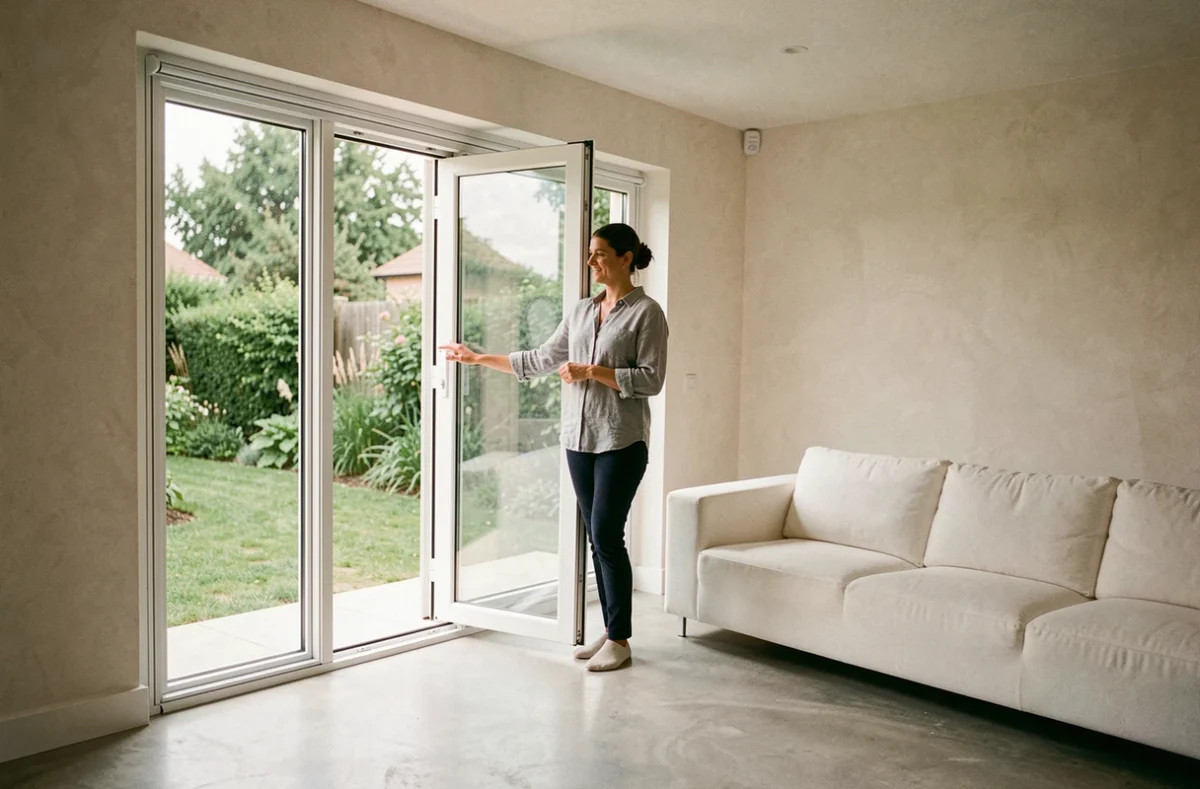
The argument for “recycled PVC” already existed. What changes in 2026 is the ability to verify it on a declared and enforceable basis. The VEKA REcycle / ORAE range announces up to 70% recycled PVC in the profiles and up to 64% recycled glass, with FDES sheets published in the INIES database.
For a project subject to RE2020, this data allows for comparing the carbon impact of joinery over its entire life cycle. Specifying a custom PVC sliding window without consulting its FDES amounts to ignoring the joinery item in the Ic construction calculation, while the regulations account for it.
Points of Caution on Recycled Profiles
- Check that the FDES covers the exact profile (reference, number of chambers) and not an average range. A 5-chamber profile and a 7-chamber profile do not have the same carbon footprint.
- The announced recycling rate must correspond to the material of the delivered profile, not to the theoretical capacity of the factory. Request the certificate batch by batch on sensitive sites.
- The integration of recycled glass in laminated or double glazing does not change the Uw or Sw performance but may affect the weight of the sash and thus the hardware of the sliding window.
Uw and Sw Coefficients Under RE2020: The Thresholds to Meet for a PVC Sliding Window
RE2020 requires simultaneous treatment of thermal insulation and summer comfort. For PVC sliding windows, this translates into two parameters to balance: the Uw coefficient (thermal transmittance) and the solar factor Sw.
A low Uw improves winter insulation but does not guarantee anything regarding summer overheating. A high Sw increases free solar gains in winter but worsens discomfort in summer, especially on south and west facades. The balance depends on the climatic zone, orientation, and glazed area relative to the living area.
Uw/Sw Balancing According to Orientation
On a north facade, we prioritize the lowest possible Uw (triple glazing feasible on a lateral fixed sliding window) without worrying about Sw. On a south or west facade, a solar control double glazing with a moderate Sw avoids the need for a shutter or sunshade to meet summer comfort requirements.
Custom solutions make sense here: a standard sliding window offers only one Uw/Sw pair. A custom sliding window allows for mixing glazing by sash, or even integrating different glazing on the opening and fixed parts.
Building REP Eco-Contribution: Impact on the Price of PVC Sliding Windows in 2026
The REP PMCB (products and materials for building construction) sector continues its rollout. For a custom PVC sliding window, the eco-contribution moderately increases the unit cost, but it adds up on a renovation site involving multiple openings.
The decree also requires the installer to take back the old joinery removed. End-of-life PVC joinery enters the recycling circuit of the sector, which precisely feeds the recycled-content profiles mentioned above. The system is circular, provided that sorting on site is effective.
What This Changes in the Quote
- The eco-contribution must appear as a separate line in the quote, not buried in the product price. Checking its presence allows for comparing offers on a net basis.
- The collection of old windows by the installer becomes a requirement, not an optional service. Plan for the time needed for removal and packaging in the schedule.
- Assistance such as MaPrimeRénov’ and CEE remains cumulative with the reduced VAT rate. The eco-contribution does not enter into the calculation base for assistance, but it increases the actual remaining charge.
Custom PVC sliding windows in 2026 are distinguished less by their aesthetics (slim profiles already existed) than by their environmental traceability and their ability to meet intersecting regulatory constraints: RE2020, PMR accessibility, building REP. The choice of a sliding window is now made as much on its FDES sheet and AEV class as on its price per linear meter.