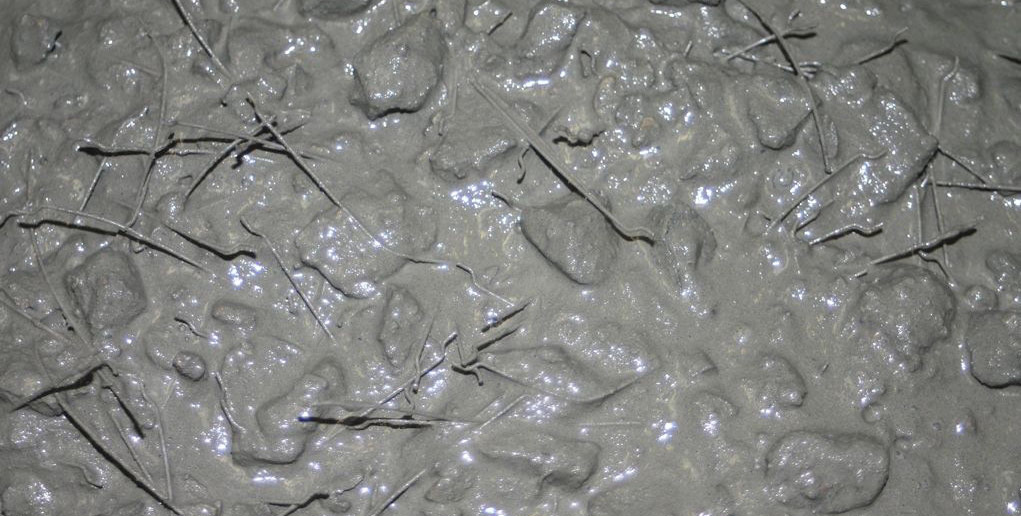
Fiber-reinforced concrete gets its name: it is indeed a concrete containing fibers. These fibers must be mixed with concrete according to the necessary amount to make the pouring effective.
The homogeneous distribution of fibers within the concrete is one of the key elements for successful pouring with this reinforced concrete.
Article navigation
- Definition
- Composition
- Advantages
- Families of fibers
- Fiber-reinforced concrete for what purposes?
Definition
Fiber concrete is a reinforced concrete containing what is generally necessary for the composition of concrete in addition to the fibers, namely:
- sand;
- cement;
- gravel;
- fibers;
and of course water.
For concrete to become fiber-reinforced, it is necessary to add fibers that can be of various types, but are generally flexible and 5-60 mm long.
The fibers used with such concrete can be metallic, organic, ceramic, or mineral materials. Depending on the effects you want to achieve in the concrete, one or another of these types of fibers will need to be used.
The composition
To obtain fiber-reinforced concrete, it is necessary to perform a traditional concrete mix. We will therefore take cement, gravel, sand, and water, all in the right dosage to achieve concrete of remarkable quality.
Fibers that can be metallic, organic, or others are then added. The mix must be fluid enough, making it easier to achieve homogeneity by stirring in all directions.
It is therefore a composition very close to the concrete that everyone knows, with also some additives that may be invited to enhance the quality of the mix.
The preferred dosage of fibers will be done at an interval of 0.5 – 2% of the total volume of concrete, to ensure that there are neither too many nor too few fibers.
If fiber-reinforced concrete is used, it is sometimes to replace the metallic reinforcement that was supposed to accompany the pouring. This replacement can in some cases be total, for example when the fibers are metallic in nature, but it can also be partial as a contribution to the solidification of the concrete structure.
The total replacement mode can be practical when one wishes to avoid the need to change the rebar, but simply to add small pieces into the concrete.

Advantages
The advantages of fiber-reinforced concrete will strongly depend on the nature of the fibers that compose it. In any case, the quality of the concrete thus obtained becomes very important and different from that of conventional concrete.
The advantages of fiber-reinforced concrete are numerous:
- Great ease of implementation;
- More lightweight compared to traditional concrete;
- The possibility of partial or total replacement of rebar in the pouring;
- Greater resistance to all types of hazards and in the long term: cracks, shocks, structural fatigue, fire, tension, abrasion, etc.
- Better ductility of the concrete or deformation without rupture;
- A reduction in shrinkage effects after pouring is completed.
Better adhesion of the concrete;
Some craftsmen may even consider replacing reinforced concrete with fiber-reinforced concrete, as the latter is much more malleable and easier to install for the construction of a slab.
For surface foundations, industrial coatings, or flooring, using concrete containing fibers will be much simpler, with fewer cracks or none at all, and with a more homogeneous and solid finish.
Families of fibers
The fibers used in fiber-reinforced concrete are classified into three main families:
- Metallic fibers: cast iron, steel, or stainless steel;
- Organic fibers: Kevlar, carbon, aramid, acrylic, polyamide polypropylene/polyethylene, polypropylene;
- Mineral or ceramic fibers: glass, basalt, mica, wollastonite.
The advantages of fiber-reinforced concrete must therefore be studied based on the family of fibers used for its composition. Thus, it will be easier to assess the importance of each of these families in the quality of the slabs or pits of a construction.
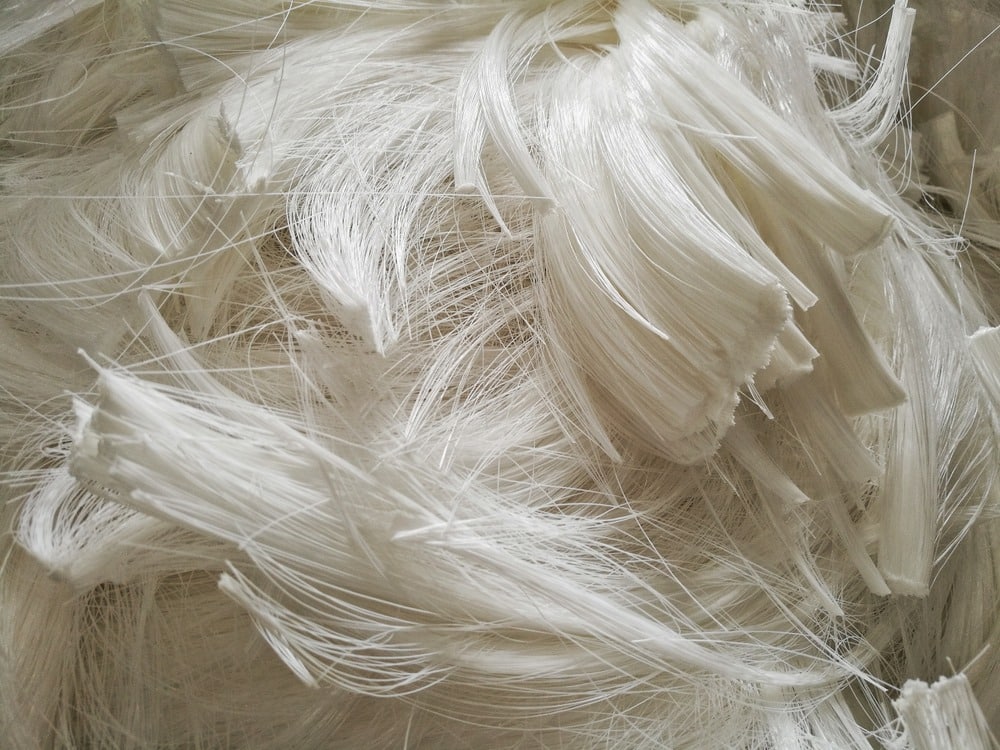
The advantages of using fiber families in concrete are as follows:
- For organic fibers: no short-term cracks, precision in molding, and heat resistance;
- Mineral fibers: very good thermal insulation and excellent fire resistance.
For metallic fibers: reduction of cracks due to endurance against bending and tension experienced;
It is understood that fibers have very important properties that they are likely to transmit to the concrete, providing unsuspected qualities and at the same time highly sought after.
Fiber-reinforced concrete for what purposes?
Fiber-reinforced concrete can be chosen for different types of construction due to its unmatched performance:
- Pouring slabs;
- Pouring floors;
- Construction of walls, plaster, or other facade coatings.
However, care must be taken to choose the right family of fibers in order to also choose the effects that should be reflected in the structure to be built.
The least recommended case is the use of fiber-reinforced concrete for foundations. Indeed, foundations would undoubtedly be much better with a classic iron frame, as they will need to fully support a building that will be quite large and imposing for a very long time.
Moreover, considering a very strong concrete when compressed (C30/37) is also of paramount importance for the addition of metallic fibers to the reinforced concrete.
This type of fiber-reinforced concrete is nevertheless very practical for solving many equations regarding the quality of concrete and the properties it should have.
Fiber-reinforced concrete will provide you with a very strong and durable masonry structure compared to normal concrete. It is also necessary to expect to pay a little more to have the required quality of concrete and contain the family of fibers that suits the place.
Tag: fiber-reinforced concrete