
Hang onto a bar, arms extended, and pull your chin above it. Repeat ten times without letting go. Most adult men are unable to do this, yet the question keeps coming up in gyms and on forums. The problem is that no solid population study provides a clear percentage of men capable of performing ten strict pull-ups in a row.
The figures circulating online often come from marketing content or estimates without verifiable methodology. Rather than repeating a dubious statistic, it is more useful to understand what ten pull-ups really represent, and how testing protocols change the game.
What ten strict pull-ups reveal about your fitness level
Ten consecutive pull-ups, performed correctly, place a man well above average. The average for a regular practitioner is between three and five complete repetitions, according to data reported by several specialized physical training websites.
To assess the percentage of men capable of doing 10 pull-ups, a standardized protocol would need to be applied to a representative sample of the population. Such a study does not exist in the accessible literature. The often-cited orders of magnitude (around five percent of the global population capable of doing a single correct pull-up, according to some publications) mix men, women, all ages, and do not specify the required technique.
Ten strict pull-ups correspond to a confirmed intermediate level for a man who trains. A complete beginner will struggle to do even one. An advanced practitioner can do fifteen to twenty without major difficulty.

Strict pull-ups, kipping, chin-ups: the protocol changes everything
You may have noticed that two people can claim “ten pull-ups” without referring to the same exercise? The definition of a pull-up varies greatly depending on the context, and this difference skews any comparison.
Strict pull-up
Overhand grip (palms facing forward), starting from a dead hang with arms fully extended, controlled ascent until the chin is above the bar, complete descent. No momentum, no body swinging. This is the most demanding standard and the only one that allows for a reliable comparison.
Chin-up (underhand grip)
The palms are facing the face. The biceps work more, making the movement easier. Most people can do two to three more repetitions in chin-ups than in strict pull-ups. Claiming ten chin-ups does not equate to ten pull-ups.
Kipping pull-up
Used in CrossFit, this movement utilizes a hip swing to generate momentum. The number of repetitions increases significantly, but the muscular engagement of the back and arms decreases. Comparing a kipping pull-up to a strict pull-up is like comparing a wind-assisted sprint to a straight-line sprint.
When someone states a figure about “the percentage of men capable of doing ten pull-ups,” the first question to ask concerns the protocol. Without this precision, the figure means nothing.
Pull-up thresholds for men: beginner, intermediate, advanced
Military physical tests and fitness grids use concrete thresholds. Here are the most commonly accepted benchmarks for strict pull-ups (overhand grip, no momentum) among adult men:
- Beginner (0 to 3 repetitions): the majority of untrained men fall here. Successfully completing a single clean pull-up already requires a correct strength-to-body weight ratio.
- Intermediate (4 to 12 repetitions): this level corresponds to several months of regular training. Ten pull-ups place a man in the upper part of this category.
- Advanced (13 to 20 repetitions): typical level of a trained athlete, operational military personnel, or regular climber.
- Elite (more than 20 repetitions): specialized athletes, calisthenics competitors. Some military tests require a minimum in this range for special units.
These thresholds vary according to age, body weight, and level of practice. A man weighing 90 kg who does ten strict pull-ups moves much more weight than a man weighing 65 kg at the same number of repetitions. Body weight is the most underestimated variable in evaluating pull-ups.
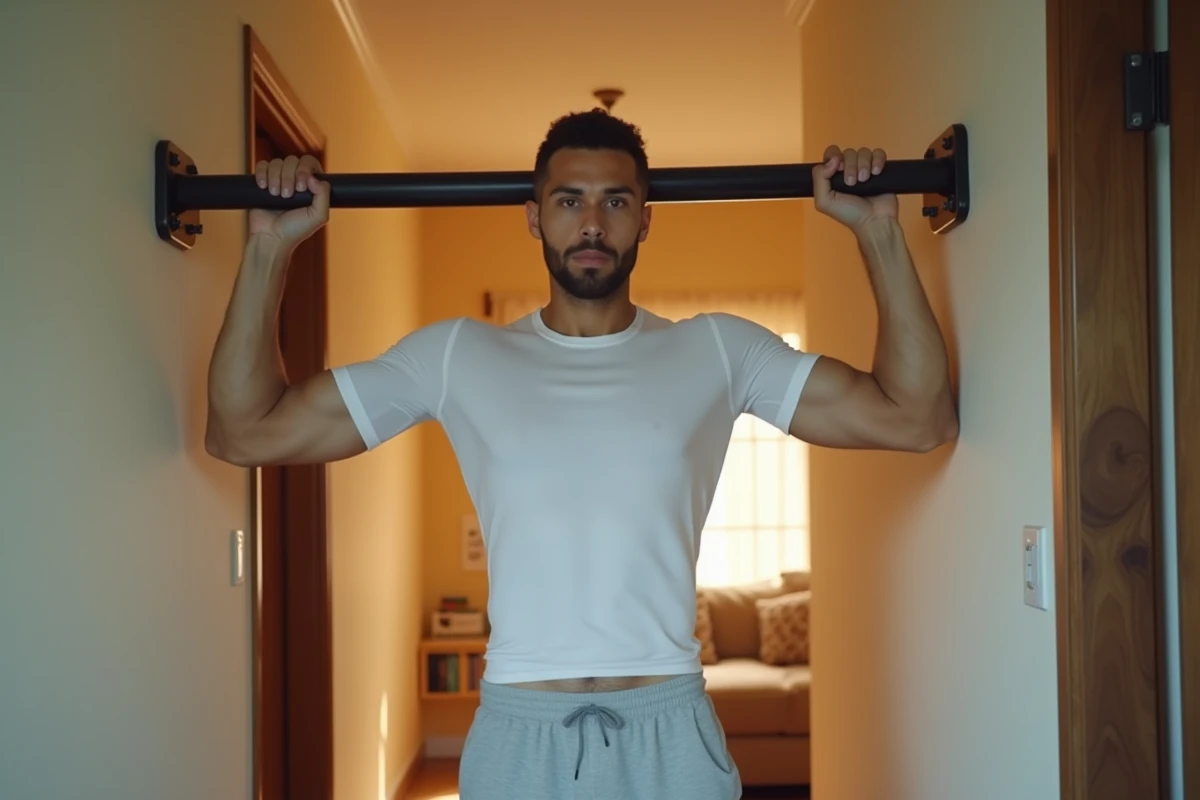
Why military pull-up tests differ
Armies around the world incorporate pull-ups into their physical assessments, but the requirements vary widely.
Some military branches require a minimum of three pull-ups to pass an entry test. Others set the bar much higher for combat units. The type of grip (overhand or underhand) and tolerance for cheating movements (slight swinging accepted or not) also change according to protocols.
A timed test, where the candidate must perform as many repetitions as possible in two minutes, does not measure the same thing as a maximum repetitions test with no time limit. The former assesses muscular endurance, while the latter measures pure strength.
This variability partly explains why no universal figure circulates regarding the proportion of men reaching ten pull-ups. The result depends as much on the definition of the movement as on the population being tested.
Progressing to ten strict pull-ups: what works
For a man starting from zero or two to three repetitions, reaching ten pull-ups typically requires several weeks to a few months of targeted training. Two approaches yield concrete results:
- Negative pull-ups: start with your chin above the bar and descend as slowly as possible. This work strengthens the back and arm muscles in the most difficult phase of the movement.
- Short repeated sets: rather than aiming for muscular failure, doing several sets of two to three repetitions with long pauses accumulates volume without exhausting the nervous system.
- Working with resistance bands: the band assists the ascent and allows for completing longer sets. The goal is to gradually reduce the assistance until it is no longer needed.
Frequency matters more than intensity for this movement. Three to four short sessions per week produce better results than a single long session. The body adapts to the repeated motion, not to the occasional effort.
Reaching ten strict pull-ups remains an achievable goal for the vast majority of healthy men, regardless of their starting age. The fact that so few succeed is more due to a lack of regular practice than to a physiological limit.